
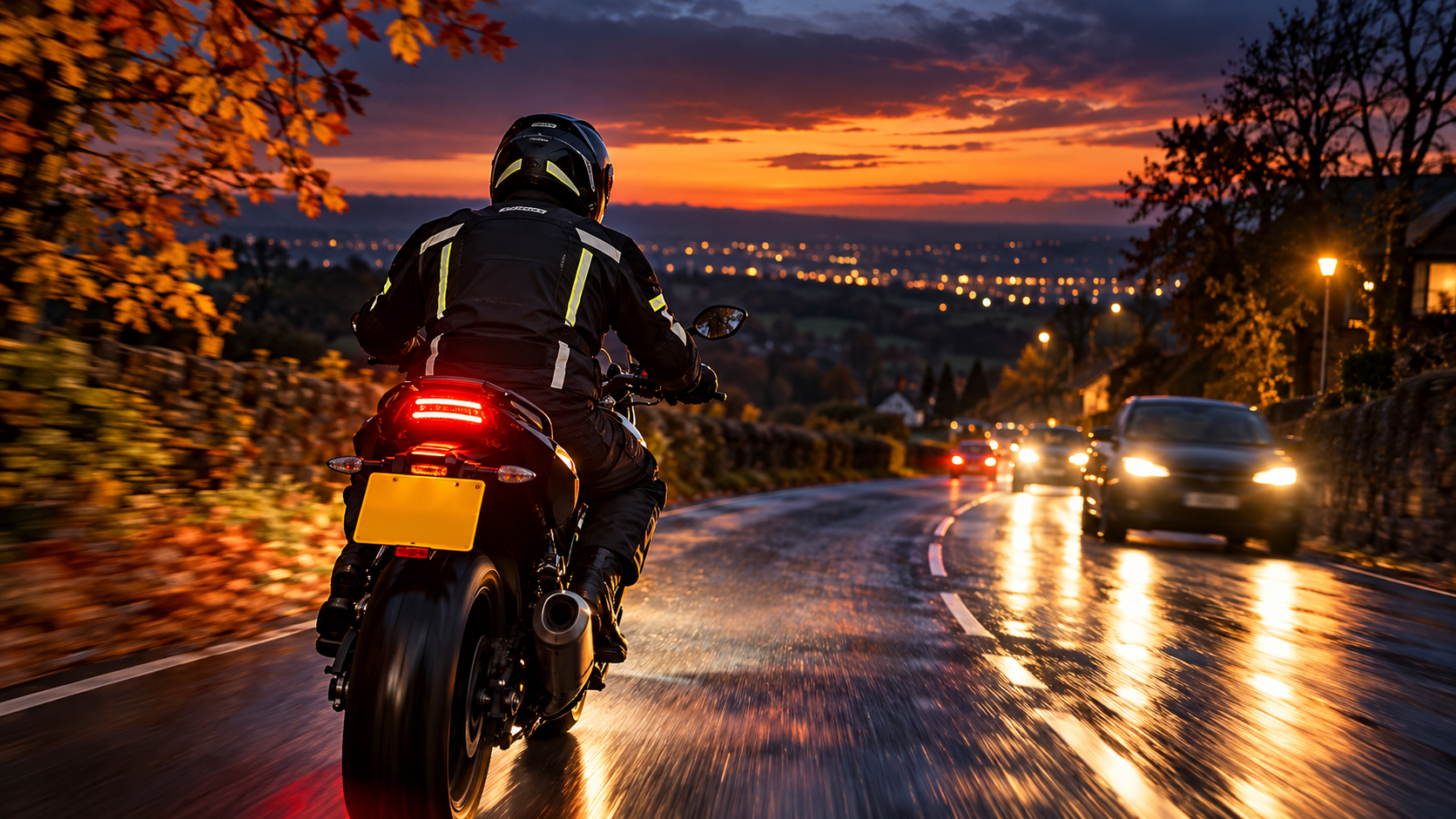
Darker evenings. Less visibility. Same love of riding.
There's something about riding at this time of year. The roads look different, the temperature drops and that familiar journey home suddenly feels a little less familiar.
On Sunday 25 October, the clocks go back an hour. Great news if you fancy an extra hour in bed. Not quite so great if your daily ride home from work or college is about to become a journey in the dark.
For those of us who ride all year round, it's nothing new. But even experienced riders can get caught out when the conditions change.
The good news? A few smart adjustments can make a real difference.
Make yourself easier to spot
We've all heard a driver say, "Sorry mate, I didn't see you."
It's a phrase no rider ever wants to hear, particularly when it's followed a near miss.
As daylight fades, motorcycles and scooters can become harder to distinguish from surrounding traffic. Add rain, road spray and the glare of headlights, and spotting a rider becomes even more challenging.
So give yourself the best possible chance of being seen.
Start with the basics. Check that your headlight, rear light, brake light and indicators are working properly. Keep lenses and reflectors clean, especially once autumn road grime starts building up.
And don't overlook your riding kit.
Love the all-black look? Plenty of us do. You don't need to abandon your style, but adding reflective detailing to your jacket, trousers or other kit can help you stand out when headlights catch it.
Reflective elements on your bike or luggage can also improve your visibility from different angles. Just make sure anything you add is suitable for the bike and doesn't obscure lights, registration plates or other essential equipment.
Being visible isn't a guarantee that someone will see you. But every little advantage helps.
That driver at the junction? Don't assume they've spotted you.
Picture the scene.
You're riding along a familiar road. A car is waiting at a side junction. You've got priority and everything looks fine.
Then the car starts moving.
It's a situation many riders recognise, and darkness can make it harder to judge whether another road user has registered your approach.
Your headlight might be visible, but against a backdrop of streetlights, other vehicles and reflections from wet roads, it can be surprisingly difficult for drivers to judge your distance and speed.
This is where anticipation really earns its keep.
Look for the little clues. Is the vehicle creeping forward? Have its wheels started turning? Does the driver's behaviour suggest they're preparing to pull out?
Never rely on eye contact alone as proof you've been seen.
Think about your road position, adjust your speed where necessary and give yourself room to react.
The best escape plan is often the one you've thought about before you need it.
Give yourself more room when the sun goes down
Riding in darkness isn't simply daytime riding with your lights switched on.
Reduced visibility means hazards can take longer to identify. Road markings may be harder to see, while potholes, wet leaves, standing water and slippery surfaces can become particularly unpleasant surprises.
And anyone who's ridden towards a stream of dazzling headlights on a wet evening knows how quickly visibility can deteriorate.
The answer isn't to become nervous or hesitant. It's to ride intelligently.
Keep a speed that allows you to stop within the distance you can see to be clear. Increase your following distance when conditions demand it and take extra care approaching junctions, bends, roundabouts and pedestrian crossings.
Pay particular attention to what your headlights actually illuminate, especially on unlit roads.
Smooth inputs, good observation and sensible positioning are worth their weight in gold at this time of year.
Tired after a long day? Your bike deserves your full attention.
We've all had those days.
An early start, a full shift at work or college, and by the time you're heading home, you're running on empty.
Now add darkness, cold weather and rush-hour traffic.
Fatigue can creep up on any rider. It affects concentration, judgement and reaction times, sometimes before we realise just how tired we are.
If you're struggling to stay alert, don't gamble on getting home safely. Take a break somewhere secure, and if you're too tired to ride, arrange another way home.
If you're feeling fit to ride, stay mentally engaged, keep your observations active and give yourself a little extra breathing space.
There's no prize for rushing home.
Keep riding. Just stay ahead of the change.
For many of us, two wheels aren't simply a summer hobby. They're how we get to work, college and everywhere in between. And there's still plenty to enjoy about riding through autumn and winter.
The trick is recognising that the roads and conditions are changing, even when your journey hasn't.
Check your bike. Think about your visibility. Watch those junctions. Give yourself space. And never underestimate the value of being ready for the unexpected.
Because good riding isn't just about how well you control your bike.
It's about spotting trouble early enough that you never have to find out how good your reactions really are.
Ride smart. Stay sharp. Enjoy the ride.